 Made in USA

Hi! I'm CodyBot. I can't answer your questions yet, but I can pass them on to my owner! 🐾
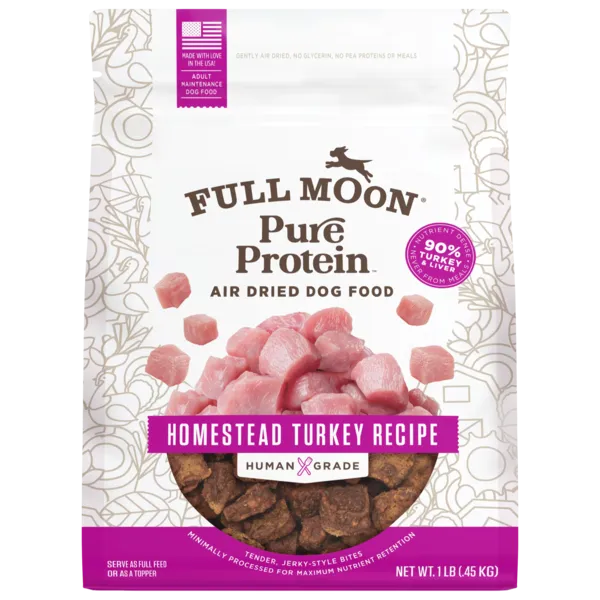
Full MoonPURE PROTEIN Air Dried Turkey Recipe
Allergy Risk
This food contains possible allergens for sensitive pets.
Notable Benefits
Ingredients
Numbered in order of predominance by weight, heaviest first. Click any ingredient for details.
PURE PROTEIN Air Dried Turkey Recipe ingredients, explained
The recipe is built on turkey: turkey and turkey liver are the first two ingredients. None of the common dog food allergens appear on the label. Omega-3 comes from fish oil powder, the form dogs use directly.
What this food is made of
A poultry protein, similar to chicken in nutrition and usually a little leaner. Fresh or deboned turkey is mostly water and ranks higher on the label than its dry contribution; turkey meal is the concentrated form. Turkey is often used as an alternative for pets that react to chicken, but the two are related birds and some pets react to both, so it is not a guaranteed swap.
Organ meat from the named animal, or unnamed when the label just says liver. Liver is one of the most nutrient-dense foods there is, rich in vitamin A, copper, iron and the B group, and most pets love the taste, which is why it is used both as an ingredient and as a flavor coating. For allergies, the species is what matters, and beef liver is beef. Unnamed liver can come from any species and may vary by batch.
A fruit added for fiber, a little natural sweetness and antioxidants. Apple flesh is safe for dogs and cats. The seeds contain a trace of a cyanide-forming compound, which matters for a dog eating whole apples and is far below any concern at the amounts of pomace or dried apple in a food. Apple pomace is what remains after juicing and is mostly fiber. In either form it appears in small amounts and does not change the nutrition of the food in a meaningful way.
A plant oil added as a source of linoleic acid, the omega-6 fat dogs and cats need for skin and coat. It is cheap, stable and well tolerated. Sunflower oil contains no omega-3, so a food that uses it as the main fat will usually add fish oil or flaxseed for balance. The high-oleic variety is lower in linoleic acid and used mainly for shelf stability.
An extract added in tiny amounts for its antioxidant compounds, and in some dental treats for breath. The caffeine content is the only real question, since caffeine is toxic to pets in quantity; the extract is usually decaffeinated or used in amounts too small to matter. There is no evidence the levels in a pet food produce any health effect. It is a marketing ingredient, safe at food levels.
Oil pressed from whole fish, usually menhaden, herring or sardine, added as the source of the omega-3 fats EPA and DHA. Those fats support skin, coat, joints and brain development, and a food that names fish oil is delivering them in the form pets use directly. It goes rancid quickly, so look for a preservative named alongside it, usually mixed tocopherols. The species is rarely stated, which matters only if your pet reacts to fish.
Vitamins, minerals and additives (8)
The nutrient pack nearly every complete food carries. Expand to read what each one does.
A calcium and phosphorus source that also keeps dry food from clumping. Both minerals are essential and their ratio matters for bone health. Routine and safe. For cats with kidney disease, phosphorus level is the number to watch, and the source is less important than the total.
Sodium and chloride, both essential, plus a palatability boost. Pets need less than people, and the minimum is set in the nutrient profiles the food is formulated to. Salt high on the list of a treat is a flavor choice; salt near the end of a complete food is nutrition. Ask your vet before choosing a low-sodium food for heart or kidney disease rather than reading labels alone.
A natural acid, the same one found in citrus, used alongside mixed tocopherols to slow fat from going rancid. It works by binding the trace metals that speed up oxidation. The amounts are tiny and it is one of the most benign preservatives available. A persistent claim links citric acid to bloat in dogs; it rests on one observational study with no mechanism behind it, and most veterinary nutritionists do not consider it supported.
A calcium source, the same compound as limestone or chalk. Meat is low in calcium and high in phosphorus, so foods add calcium to keep the two in balance, which matters for bone and for large-breed puppies in particular. Routine and safe. Not an allergen.
A copper source. Copper is essential in small amounts for blood, connective tissue and coat color. Some veterinary nutritionists have questioned whether modern dog foods carry more copper than dogs need, and a few breeds (Bedlington Terriers, Labradors among them) are prone to storing it in the liver. For most pets it is a routine additive. If your dog has a diagnosed liver condition, copper level is worth a vet conversation.
A manganese source. Manganese is needed in tiny amounts for bone, cartilage and enzyme function. Sulfate is the inorganic form; proteinate is the mineral bound to protein. The choice between them is a marketing distinction more than a health one for a healthy pet. Expected, safe, not an allergen.
Dogs and cats cannot make useful amounts of vitamin D from sunlight, so it has to be in the food. It governs calcium and bone health. It is also one of the few vitamins where too much is dangerous: excess vitamin D has caused pet food recalls. The amount is regulated and the presence of D3 on a label is expected. What matters is that the maker gets the dose right, which is a quality-control question, not an ingredient question.
Vitamin B1, essential for nerves and energy metabolism, and the vitamin most often behind cat food recalls. It is destroyed by heat and by some preservatives, so canned foods in particular must add it back. Cats are especially sensitive to running short. Its presence is expected; its absence from a cooked food would be a red flag.
About this food
Say goodbye to bland kibble and hello to our Free Range Air-Dried Turkey. Our tender, nutrient-rich bites are made with 90% real turkey and air-dried to preserve essential nutrients and amino acids. No fillers, pea protein, or rendered meats—just human-grade ingredients ready to store, scoop, and serve.
From the manufacturer. May contain marketing language.
Pricing & Formats
Available Sizes
Not specified
Where to buy
Reader-supported: we may earn a commission when you buy through these links. How we make money
Guaranteed Analysis
Each bar shows the typical range for dog foods in our database. The marker shows where this product falls.
*Not recognized as an essential nutrient by the AAFCO Dog Food Nutrient Profiles.
Similar foods you may like
Based on shared ingredients, features, and customer preferences
PURE PROTEIN Air Dried Beef Recipe
Medium risk
PURE PROTEIN Air Dried Chicken Recipe
Medium risk
High Plains Select Small Bites Dog Food
Medium risk
Woodlands Select Small Bites Dog Food
Medium riskWild Red Raw Coated Wholesome Grains Prairie Recipe for Dogs
Medium riskReview Sources
Our aggregate score is calculated from reviews across multiple retailers
No ratings available