
Hi! I'm CodyBot. I can't answer your questions yet, but I can pass them on to my owner! 🐾
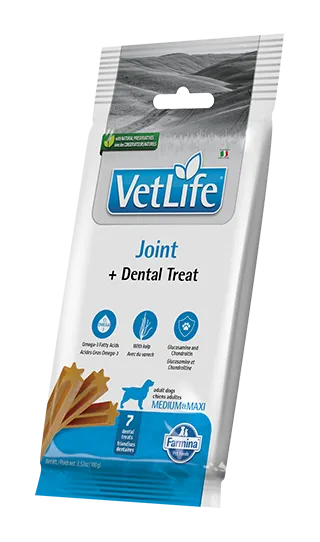
FarminaVet Life Canine - dental treat Joint medium & maxi
Allergy Risk
This food contains possible allergens for sensitive pets.
Notable Benefits
Ingredients
Numbered in order of predominance by weight, heaviest first. Click any ingredient for details.
Vet Life Canine - dental treat Joint medium & maxi ingredients, explained
Common dog food allergens on the label: chicken. Omega-3 comes from herring oil, the form dogs use directly.
What this food is made of
A grain used as an easily digested carbohydrate. White rice has had the bran removed; it digests fast and is the classic bland-diet starch. Brewers rice is the small broken fragments left after milling, nutritionally the same as white rice despite its reputation as a cheap filler. Rice bran is the outer layer, mostly fiber and oil. Grain allergy is rare in pets; rice is one of the least reactive grains.
A staple of grain-free recipes, supplying starch, fiber and plant protein. Peas were common in the diets examined in a federal investigation into heart disease in dogs; the investigation did not establish a cause and no ingredient was banned. Pea protein high on a list can inflate the protein number with a plant source. Pea allergy is rare. Not a problem, but worth noticing when it appears in several forms in one recipe.
A root vegetable used as a carbohydrate source, especially in grain-free foods. It supplies energy, fiber and beta carotene and is well digested by dogs. There is no good evidence it beats rice or oats nutritionally, though it is a reasonable choice for pets that do poorly on grains. Like any starch, a food that lists it high is a starch-heavy food.
The most common protein in pet food, and for dogs one of the most common food allergens, with beef and dairy. If chicken is what your pet reacts to, it hides everywhere: chicken fat, chicken broth, chicken meal, natural flavor. On a label, chicken listed first is weighed with its water still in, so a food leading with fresh chicken often has less chicken protein than one leading with chicken meal. Neither is better; they are different measures.
Oil pressed from whole fish, usually menhaden, herring or sardine, added as the source of the omega-3 fats EPA and DHA. Those fats support skin, coat, joints and brain development, and a food that names fish oil is delivering them in the form pets use directly. It goes rancid quickly, so look for a preservative named alongside it, usually mixed tocopherols. The species is rarely stated, which matters only if your pet reacts to fish.
A legume plant, the same one fed to horses, dried and added as a source of fiber, vitamins and chlorophyll. It appears in small amounts and gives kibble a greenish fleck. Alfalfa is safe for dogs and cats at these levels. The protein it contains is small and poorly digested by carnivores, so it adds little nutrition.
Vitamins, minerals and additives (9)
The nutrient pack nearly every complete food carries. Expand to read what each one does.
A thickener from the guar bean, used to give wet food its texture and hold gravy together. It is a soluble fiber, and in large amounts it can soften stool. Not an allergen of note. Its presence tells you about texture, not nutrition.
Purified plant fiber, usually from wood pulp, added as an insoluble fiber. It bulks stool, dilutes calories in weight-control foods and helps move hair through a cat's gut, which is why it is common in hairball formulas. It passes through undigested and supplies fiber only. The wood origin sounds alarming, but the product is the same purified cellulose used in human foods.
A potassium source and an electrolyte. Potassium keeps muscles and nerves working, including the heart, and cats lose more of it than dogs do. It also stands in for part of the salt in foods that are formulated lower in sodium. A routine additive with no allergy or safety concern at food levels.
A dried seaweed added as a natural source of iodine and trace minerals. Iodine is needed for thyroid function, and kelp is one of the few whole-food sources of it. The iodine content of kelp varies a great deal between harvests, so it has to be tested and dosed carefully, and the label will not tell you whether it was. Pets with thyroid disease should get the vet's view on foods that use kelp as the main iodine source.
A phosphate salt used to keep wet food moist and hold its texture, and in some dry foods to reduce tartar by binding calcium in saliva. It is an approved additive in human and pet food. Because it adds phosphorus, it is one of the ingredients a vet may ask you to avoid in a cat or dog with kidney disease, where phosphorus intake matters. For healthy pets at label levels it is not a concern.
Sodium and chloride, both essential, plus a palatability boost. Pets need less than people, and the minimum is set in the nutrient profiles the food is formulated to. Salt high on the list of a treat is a flavor choice; salt near the end of a complete food is nutrition. Ask your vet before choosing a low-sodium food for heart or kidney disease rather than reading labels alone.
A building block of cartilage, usually from shellfish shells, added to joint-support and senior foods. The evidence in dogs is mixed: some trials show modest improvement in arthritis signs, others none, and the dose in a food is typically well below the dose used in those trials. No safety issue at food doses. If joint support is the goal, the amount per cup, stated on the bag, is the number to compare; the ingredient's presence alone says little.
A cartilage component, usually from cattle or chicken cartilage, almost always paired with glucosamine in joint-support foods. The same caveats apply: the evidence in dogs is modest, the dose in a complete food is usually below that used in supplement trials, and the amount on the bag is what to compare. Because it usually comes from chicken or beef cartilage, strict allergy diets may need to check the source.
A fat-soluble antioxidant that protects cells and the fats in the food itself. It is in nearly every complete food, both as a nutrient and, under the name mixed tocopherols, as the natural preservative that keeps fat from going rancid. Deficiency is rare in pets eating a complete diet. Nothing to worry about on a label, and a sign the maker is preserving with vitamin E rather than synthetic chemicals.
About this food
Farmina Pet Foods - dog food - farmina vet life canine - dental treat joint medium & maxi
From the manufacturer. May contain marketing language.
Pricing & Formats
Available Sizes
Not specified
Where to buy
Reader-supported: we may earn a commission when you buy through these links. How we make money
Guaranteed Analysis
Each bar shows the typical range for dog foods in our database. The marker shows where this product falls.
*Not recognized as an essential nutrient by the AAFCO Dog Food Nutrient Profiles.
Similar foods you may like
Based on shared ingredients, features, and customer preferences
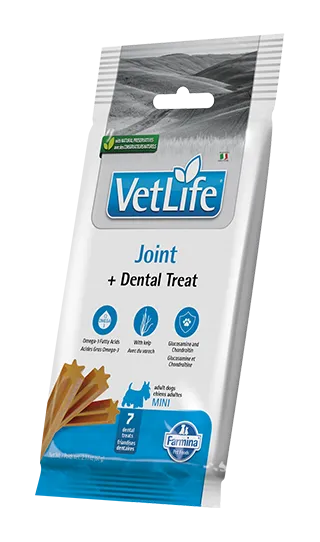
Vet Life Canine - dental treat Joint mini
Medium risk
Vet Life Canine - dental treat Urinary ST/control with Kelp for medium & maxi dog
Medium risk
Vet Life Canine - dental treat Urinary ST/control with Kelp for mini dog
Medium risk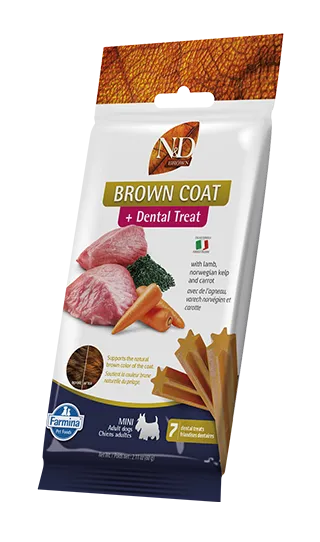
N&D Brown - Brown Coat Dental Treat with lamb, Norwegian kelp and carrot mini
Medium risk
Vet Life Canine - dental treat Renal medium & maxi
Medium riskReview Sources
Our aggregate score is calculated from reviews across multiple retailers
No ratings available