 Made in USA

Hi! I'm CodyBot. I can't answer your questions yet, but I can pass them on to my owner! 🐾
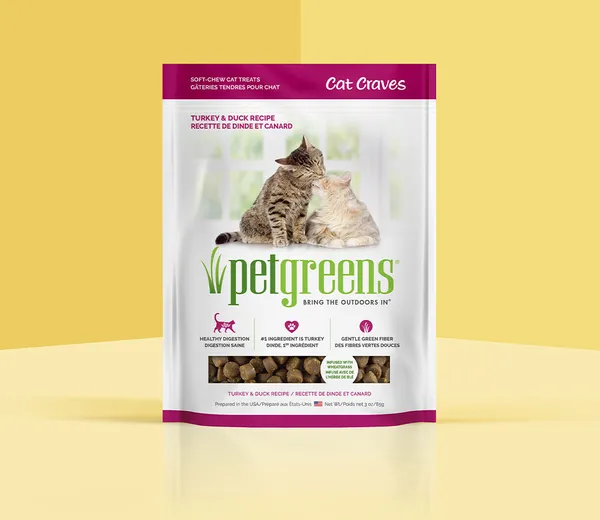
Pet GreensTurkey & Duck Flavor Cat Treats
Allergy Risk
This food contains possible allergens for sensitive pets.
Notable Benefits
Ingredients
Numbered in order of predominance by weight, heaviest first. Click any ingredient for details.
Turkey & Duck Flavor Cat Treats ingredients, explained
None of the common cat food allergens appear on the label. Omega-3 comes from salmon oil, the form cats use directly.
What this food is made of
A poultry protein, similar to chicken in nutrition and usually a little leaner. Fresh or deboned turkey is mostly water and ranks higher on the label than its dry contribution; turkey meal is the concentrated form. Turkey is often used as an alternative for pets that react to chicken, but the two are related birds and some pets react to both, so it is not a guaranteed swap.
A grain used as an easily digested carbohydrate. White rice has had the bran removed; it digests fast and is the classic bland-diet starch. Brewers rice is the small broken fragments left after milling, nutritionally the same as white rice despite its reputation as a cheap filler. Rice bran is the outer layer, mostly fiber and oil. Grain allergy is rare in pets; rice is one of the least reactive grains.
A cereal grain used as a slow-digesting carbohydrate. It is high in soluble fiber, especially beta-glucan, and has a lower glycemic effect than rice, which is why it turns up in weight-control and diabetic foods. Pearled barley has had the hull removed, which lowers the fiber somewhat. Barley grass is a different ingredient, a young green shoot used as a vegetable.
The familiar white potato, used as a carbohydrate source in many grain-free foods. Potato starch binds kibble; potato protein is a concentrated plant protein that lifts the protein figure on the bag. Cooked potato is safe and well digested. Grain-free foods built on potatoes and legumes were part of the FDA's 2018 to 2022 look at diet-associated heart disease in dogs, which did not establish a cause; the agency has not asked for any to be withdrawn.
The dried cells of yeast, often a by-product of brewing. It is rich in B vitamins, protein and minerals, improves flavor, and contains compounds that may support gut bacteria. Despite a persistent myth, there is no evidence it repels fleas. Yeast is an uncommon allergen in pets. Yeast culture is a slightly different product, a fermented feed that supplies similar nutrients.
Oil pressed from salmon, added for the omega-3 fats EPA and DHA that support skin, coat and joints. It does the same job as generic fish oil but names its source, which helps if your pet reacts to other fish. Like all fish oils it spoils easily and needs a preservative, usually mixed tocopherols. The levels used in food are a modest supplement, well below a therapeutic dose.
Starch from the cassava root, used to bind kibble and as a carbohydrate source, especially in grain-free foods. It is nearly pure starch with little protein, fiber or micronutrients, and it is one of the least likely ingredients to trigger an allergy. A food that leans on tapioca for carbohydrate is getting easy digestibility and little else from it, which is fine as long as the rest of the recipe carries the nutrition.
A poultry protein, fattier and richer in iron than chicken. As with other fresh meats, the wet weight pushes it up the list; duck meal is the dried form. Duck is a different family of bird from chicken and turkey, which is why it is used as a novel protein, though pets that react to chicken sometimes react to duck as well.
Almost always rosemary extract, used as a natural antioxidant to keep fats fresh, usually alongside mixed tocopherols. The amounts are tiny. A persistent internet claim links rosemary to seizures in dogs; there is no published evidence for it at food levels. If your dog has epilepsy, ask your neurologist rather than avoiding foods on this basis alone.
Vitamins, minerals and additives (1)
The nutrient pack nearly every complete food carries. Expand to read what each one does.
Sodium and chloride, both essential, plus a palatability boost. Pets need less than people, and the minimum is set in the nutrient profiles the food is formulated to. Salt high on the list of a treat is a flavor choice; salt near the end of a complete food is nutrition. Ask your vet before choosing a low-sodium food for heart or kidney disease rather than reading labels alone.
About this food
Treat your cat to natural, soft-chew Turkey & Duck Cat Craves with wheatgrass for optimal indoor health and digestion!
From the manufacturer. May contain marketing language.
Pricing & Formats
Available Sizes
Not specified
Where to buy
Reader-supported: we may earn a commission when you buy through these links. How we make money
Similar foods you may like
Based on shared ingredients, features, and customer preferences
Salmon Flavor Cat Treats
Medium risk
Chicken Flavor Cat Treats
Medium risk
Tuna Flavor Cat Treats
Medium risk
Raw Coated Kibble Cage-Free Duck Recipe for Cats
Medium risk
Cat Person Grain-Free Duck & Turkey Dry Cat Food
Medium riskReview Sources
Our aggregate score is calculated from reviews across multiple retailers
No ratings available