 Made in USA

Hi! I'm CodyBot. I can't answer your questions yet, but I can pass them on to my owner! 🐾
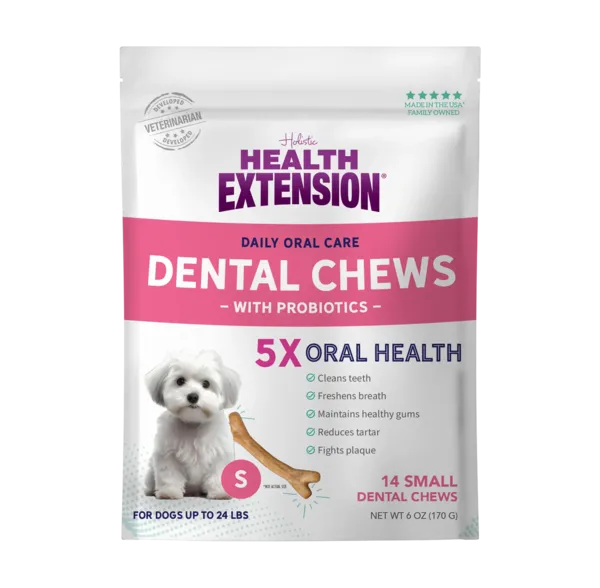
Health ExtensionProbiotic Dental Bones for Dogs
Allergy Risk
This food contains possible allergens for sensitive pets.
Notable Benefits
Ingredients
Numbered in order of predominance by weight, heaviest first. Click any ingredient for details.
Probiotic Dental Bones for Dogs ingredients, explained
Common dog food allergens on the label: dairy. The only omega-3 source is flaxseed, which dogs convert to the useful forms inefficiently.
What this food is made of
The familiar white potato, used as a carbohydrate source in many grain-free foods. Potato starch binds kibble; potato protein is a concentrated plant protein that lifts the protein figure on the bag. Cooked potato is safe and well digested. Grain-free foods built on potatoes and legumes were part of the FDA's 2018 to 2022 look at diet-associated heart disease in dogs, which did not establish a cause; the agency has not asked for any to be withdrawn.
A grain used as an easily digested carbohydrate. White rice has had the bran removed; it digests fast and is the classic bland-diet starch. Brewers rice is the small broken fragments left after milling, nutritionally the same as white rice despite its reputation as a cheap filler. Rice bran is the outer layer, mostly fiber and oil. Grain allergy is rare in pets; rice is one of the least reactive grains.
A plant oil, low in saturated fat, added as a source of the omega-6 fat linoleic acid with some plant omega-3 as well. It is inexpensive and stable. The plant omega-3 in canola is not converted efficiently to the forms pets use, so it does not replace fish oil. Canola is often genetically modified, which some owners prefer to avoid; there is no evidence that matters for the pet.
A culinary herb added in tiny amounts, usually with a claim about fresh breath. Parsley does contain chlorophyll and some vitamins, but there is no evidence that the fraction of a percent in a pet food changes breath or anything else. It is safe at these levels. It appears on some toxic-plant lists because very large amounts can cause light sensitivity; the pinch in a pet food is nowhere near that.
A plant source of omega-3 fat (alpha-linolenic acid) and fiber, used in about a third of dog foods for coat and stool quality. Dogs and cats convert plant omega-3 to the useful forms inefficiently, so fish oil does the job better. Flax is not a documented common allergen, though some pets tolerate it poorly, most often as loose stool. Fine in a food; not a reason to prefer it over one using fish oil.
Almost always rosemary extract, used as a natural antioxidant to keep fats fresh, usually alongside mixed tocopherols. The amounts are tiny. A persistent internet claim links rosemary to seizures in dogs; there is no published evidence for it at food levels. If your dog has epilepsy, ask your neurologist rather than avoiding foods on this basis alone.
Vitamins, minerals and additives (4)
The nutrient pack nearly every complete food carries. Expand to read what each one does.
A dried seaweed added as a natural source of iodine and trace minerals. Iodine is needed for thyroid function, and kelp is one of the few whole-food sources of it. The iodine content of kelp varies a great deal between harvests, so it has to be tested and dosed carefully, and the label will not tell you whether it was. Pets with thyroid disease should get the vet's view on foods that use kelp as the main iodine source.
A mild acid, the same one produced in fermented foods, used to lower the pH of a wet food or treat so bacteria and mold grow more slowly. Despite the name it is made by fermenting sugars and contains no milk, so it is fine for pets that react to dairy. The amounts are small and it is widely used in human food. It has no nutritional role and no concerns at food levels.
A natural acid, the same one found in citrus, used alongside mixed tocopherols to slow fat from going rancid. It works by binding the trace metals that speed up oxidation. The amounts are tiny and it is one of the most benign preservatives available. A persistent claim links citric acid to bloat in dogs; it rests on one observational study with no mechanism behind it, and most veterinary nutritionists do not consider it supported.
Live bacteria added to support digestion, listed by strain name such as Lactobacillus acidophilus or Bacillus coagulans. The difficulty is that most are killed by the heat of cooking and by months on a shelf, so unless the maker coats the kibble after cooking and states a live count on the bag, the listing does not tell you much. Bacillus strains form spores and survive processing better than the others. The strains used are considered safe.
About this food
Support your dog’s dental health with Health Extension Probiotic Dental Bones. Natural probiotics help freshen breath, promote healthy gums, and reduce plaque for a happy, healthy smile.
From the manufacturer. May contain marketing language.
Pricing & Formats
Available Sizes
Not specified
Where to buy
Reader-supported: we may earn a commission when you buy through these links. How we make money
Guaranteed Analysis
Each bar shows the typical range for dog foods in our database. The marker shows where this product falls.
*Not recognized as an essential nutrient by the AAFCO Dog Food Nutrient Profiles.
Similar foods you may like
Based on shared ingredients, features, and customer preferences
Fresh Breath Dental Bones for Dogs
Low allergen risk
Limited Ingredient Bland Diet Beef & Rice Recipe with Pumpkin
Medium risk
Limited Ingredient Bland Diet for Dogs
Medium risk
BLUE Natural Veterinary Diet Gastrointestinal Low Fat Dry Dog Food
Medium riskFreeStyle Limited+ Alaska Pollock & Lentils Recipe for Dogs
Low allergen riskReview Sources
Our aggregate score is calculated from reviews across multiple retailers
No ratings available