 Made in USA

Hi! I'm CodyBot. I can't answer your questions yet, but I can pass them on to my owner! 🐾
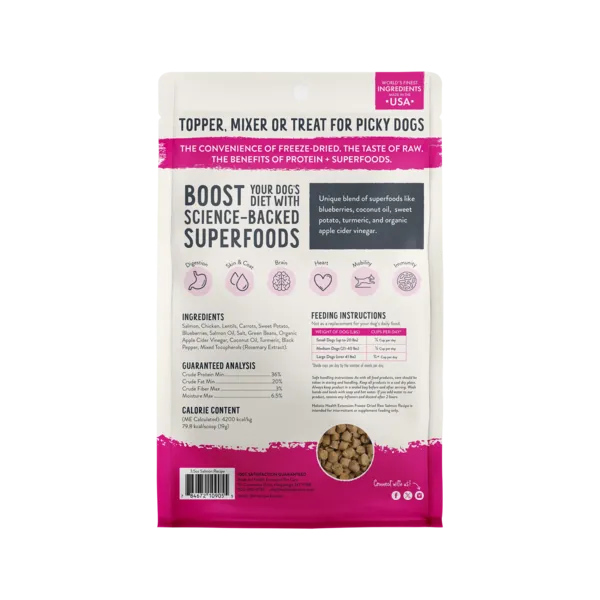
Health ExtensionFreeze Dried Raw Salmon Dog Food
Allergy Risk
This food contains possible allergens for sensitive pets.
Notable Benefits
Ingredients
Numbered in order of predominance by weight, heaviest first. Click any ingredient for details.
Freeze Dried Raw Salmon Dog Food ingredients, explained
The recipe is built on salmon: salmon and salmon oil are two of the first seven ingredients. Common dog food allergens on the label: salmon and chicken. Omega-3 comes from salmon oil, the form dogs use directly.
What this food is made of
A fatty fish used as a protein source and as a natural source of omega-3 fats. Fresh salmon is mostly water, so a salmon meal lower on the list may be contributing more protein. Salmon is a common alternative protein for pets that react to chicken or beef, though fish allergies exist too. Farmed and wild salmon differ in fat profile, and labels rarely say which.
The most common protein in pet food, and for dogs one of the most common food allergens, with beef and dairy. If chicken is what your pet reacts to, it hides everywhere: chicken fat, chicken broth, chicken meal, natural flavor. On a label, chicken listed first is weighed with its water still in, so a food leading with fresh chicken often has less chicken protein than one leading with chicken meal. Neither is better; they are different measures.
A small legume used for carbohydrate, fiber and plant protein in many grain-free foods. Lentils supply folate and iron, and like peas and chickpeas they add protein without adding meat. Lentils were among the legumes in the FDA's heart-disease review, which did not establish a cause. A food with lentils high on the list is a plant-protein-forward recipe.
A vegetable that contributes a little fiber and beta-carotene and a lot of label appeal. In dry food it is usually present in small amounts well down the list. It is not an allergen of concern and not a meaningful protein or calorie source. Fine to see; not a reason to choose one food over another.
A root vegetable used as a carbohydrate source, especially in grain-free foods. It supplies energy, fiber and beta carotene and is well digested by dogs. There is no good evidence it beats rice or oats nutritionally, though it is a reasonable choice for pets that do poorly on grains. Like any starch, a food that lists it high is a starch-heavy food.
A fruit added in small amounts for antioxidants and a bit of fiber. Blueberries are safe for dogs and cats, and the pigments that color them are the same ones linked to antioxidant activity in people. In a complete food they appear well down the list in small amounts, so they are a modest extra and should not decide which bag you buy.
Oil pressed from salmon, added for the omega-3 fats EPA and DHA that support skin, coat and joints. It does the same job as generic fish oil but names its source, which helps if your pet reacts to other fish. Like all fish oils it spoils easily and needs a preservative, usually mixed tocopherols. The levels used in food are a modest supplement, well below a therapeutic dose.
A plant fat high in medium-chain triglycerides, fats the body can burn quickly without the usual digestion steps. Those fats are the reason coconut oil appears in some senior and brain-support foods, where small studies of medium-chain fats in older dogs showed modest cognitive benefits; a food's coconut oil is a lower dose of the same fats. It supplies almost no essential fatty acids, so a food cannot rely on it as the only fat. It is calorie-dense and fine in the small amounts used.
A spice added for color and for its curcumin, a compound studied for anti-inflammatory effects. In people and lab animals curcumin is poorly absorbed unless paired with black pepper or fat, and the amounts in a pet food are far below those used in supplement studies. It is safe and gives kibble a warm color, which is most of what it is doing here; the joint and anti-inflammatory claims rest on doses far higher than a food provides.
Vitamins, minerals and additives (2)
The nutrient pack nearly every complete food carries. Expand to read what each one does.
Sodium and chloride, both essential, plus a palatability boost. Pets need less than people, and the minimum is set in the nutrient profiles the food is formulated to. Salt high on the list of a treat is a flavor choice; salt near the end of a complete food is nutrition. Ask your vet before choosing a low-sodium food for heart or kidney disease rather than reading labels alone.
A fat-soluble antioxidant that protects cells and the fats in the food itself. It is in nearly every complete food, both as a nutrient and, under the name mixed tocopherols, as the natural preservative that keeps fat from going rancid. Deficiency is rare in pets eating a complete diet. Nothing to worry about on a label, and a sign the maker is preserving with vitamin E rather than synthetic chemicals.
About this food
Shop Health Extension’s Freeze Dried Raw Salmon dog food for dogs. Made with premium raw salmon to support skin & coat health, digestion, and overall canine vitality.
From the manufacturer. May contain marketing language.
Pricing & Formats
Available Sizes
Not specified
Where to buy
Reader-supported: we may earn a commission when you buy through these links. How we make money
Similar foods you may like
Based on shared ingredients, features, and customer preferences

RawMix Open Prairie Recipe for Dogs
Medium risk
RawMix Open Prairie Recipe-Ancient Grain for Dogs
Medium risk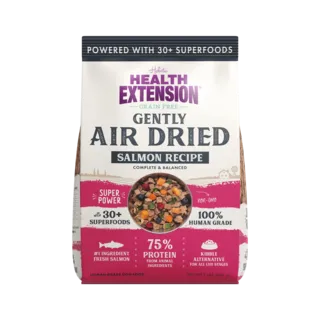
Gently Air Dried Salmon Dog Food
High risk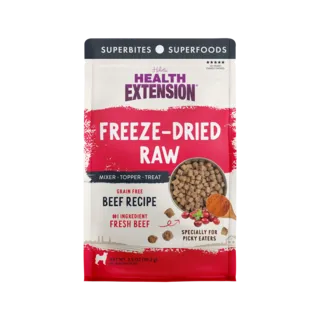
Freeze Dried Beef Dog Food
Medium risk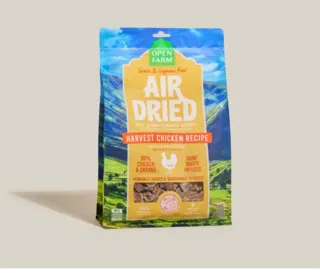
Air Dried Chicken for Dogs - Air Dried Chicken
Medium riskReview Sources
Our aggregate score is calculated from reviews across multiple retailers
No ratings available