 Made in USA

Hi! I'm CodyBot. I can't answer your questions yet, but I can pass them on to my owner! 🐾
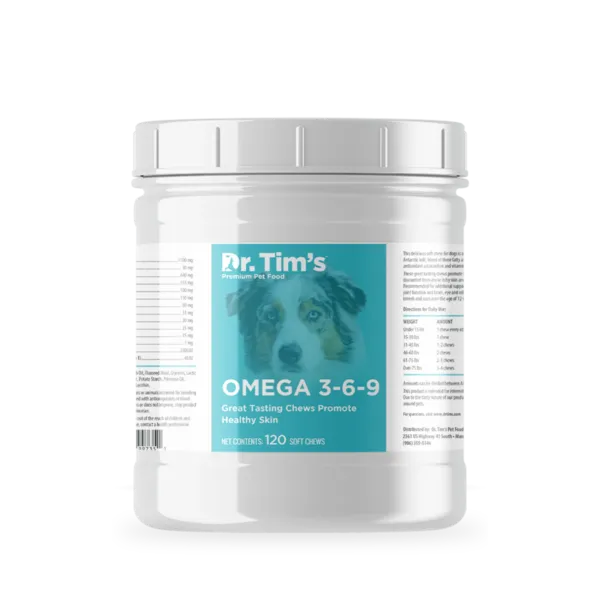
Dr TimsOmega 3/6/9 Soft Chews
Allergy Risk
It's relatively unlikely but possible for allergic reactions to this food's primary ingredients.
Notable Benefits
Ingredients
Numbered in order of predominance by weight, heaviest first. Click any ingredient for details.
Omega 3/6/9 Soft Chews ingredients, explained
None of the common dog food allergens appear on the label. Omega-3 comes from fish oil as well as flaxseed; the fish sources are the form dogs use directly.
What this food is made of
Oil pressed from whole fish, usually menhaden, herring or sardine, added as the source of the omega-3 fats EPA and DHA. Those fats support skin, coat, joints and brain development, and a food that names fish oil is delivering them in the form pets use directly. It goes rancid quickly, so look for a preservative named alongside it, usually mixed tocopherols. The species is rarely stated, which matters only if your pet reacts to fish.
A plant source of omega-3 fat (alpha-linolenic acid) and fiber, used in about a third of dog foods for coat and stool quality. Dogs and cats convert plant omega-3 to the useful forms inefficiently, so fish oil does the job better. Flax is not a documented common allergen, though some pets tolerate it poorly, most often as loose stool. Fine in a food; not a reason to prefer it over one using fish oil.
The familiar white potato, used as a carbohydrate source in many grain-free foods. Potato starch binds kibble; potato protein is a concentrated plant protein that lifts the protein figure on the bag. Cooked potato is safe and well digested. Grain-free foods built on potatoes and legumes were part of the FDA's 2018 to 2022 look at diet-associated heart disease in dogs, which did not establish a cause; the agency has not asked for any to be withdrawn.
Vitamins, minerals and additives (2)
The nutrient pack nearly every complete food carries. Expand to read what each one does.
A mild acid, the same one produced in fermented foods, used to lower the pH of a wet food or treat so bacteria and mold grow more slowly. Despite the name it is made by fermenting sugars and contains no milk, so it is fine for pets that react to dairy. The amounts are small and it is widely used in human food. It has no nutritional role and no concerns at food levels.
A fat-soluble antioxidant that protects cells and the fats in the food itself. It is in nearly every complete food, both as a nutrient and, under the name mixed tocopherols, as the natural preservative that keeps fat from going rancid. Deficiency is rare in pets eating a complete diet. Nothing to worry about on a label, and a sign the maker is preserving with vitamin E rather than synthetic chemicals.
About this food
Support your dog’s skin, coat, joints, and overall vitality with a powerful blend of essential fatty acids, natural antioxidants, and premium ingredients.
From the manufacturer. May contain marketing language.
Pricing & Formats
Available Sizes
Not specified
Where to buy
Reader-supported: we may earn a commission when you buy through these links. How we make money
Guaranteed Analysis
Each bar shows the typical range for dog foods in our database. The marker shows where this product falls.
*Not recognized as an essential nutrient by the AAFCO Dog Food Nutrient Profiles.
Similar foods you may like
Based on shared ingredients, features, and customer preferences

High Plains Select Small Bites Dog Food
Medium risk
Nutrish- Big Life Hearty Beef, Veggies & Brown Rice Dog Food
High risk
Hypo Dog Treats
Medium risk
Nutrish- Big Life Savory Chicken, Veggies & Barley Dry Dog Food
Medium risk
Low Fat Kangaroo-MAINT with Quinoa Dry Dog Food
Low allergen riskReview Sources
Our aggregate score is calculated from reviews across multiple retailers
No ratings available