 Made in USA

Hi! I'm CodyBot. I can't answer your questions yet, but I can pass them on to my owner! 🐾
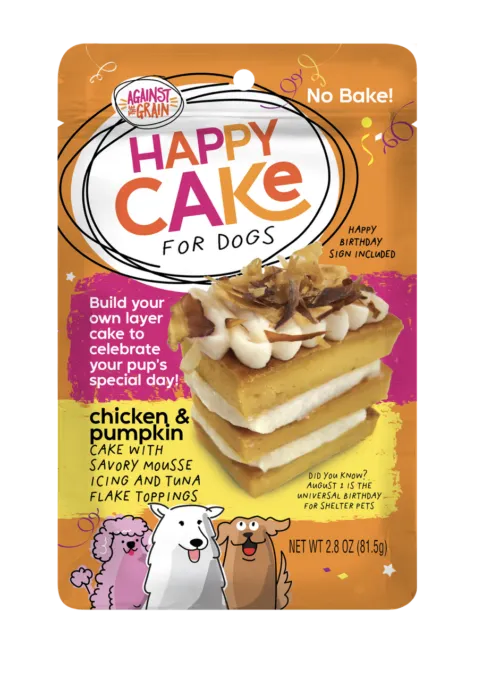
Against The GrainHappy Cake for Cats - Party Pack
Allergy Risk
This food contains possible allergens for sensitive pets.
Notable Benefits
Ingredients
Numbered in order of predominance by weight, heaviest first. Click any ingredient for details.
Happy Cake for Cats - Party Pack ingredients, explained
The recipe is built on chicken, the first ingredient on the label. Common dog food allergens on the label: chicken, tuna and egg.
What this food is made of
The most common protein in pet food, and for dogs one of the most common food allergens, with beef and dairy. If chicken is what your pet reacts to, it hides everywhere: chicken fat, chicken broth, chicken meal, natural flavor. On a label, chicken listed first is weighed with its water still in, so a food leading with fresh chicken often has less chicken protein than one leading with chicken meal. Neither is better; they are different measures.
A fish used mostly in cat foods, where its strong flavor is the point. Tuna is a good protein and a source of omega-3 fats. Two cautions apply to tuna fed often: it is higher in mercury than smaller fish, and cats can become fixated on it and refuse other foods. Both cautions apply to the cat eating tuna every day, and much less to tuna as one ingredient in a complete food fed in rotation.
A root vegetable used as a carbohydrate source, especially in grain-free foods. It supplies energy, fiber and beta carotene and is well digested by dogs. There is no good evidence it beats rice or oats nutritionally, though it is a reasonable choice for pets that do poorly on grains. Like any starch, a food that lists it high is a starch-heavy food.
A grain used as an easily digested carbohydrate. White rice has had the bran removed; it digests fast and is the classic bland-diet starch. Brewers rice is the small broken fragments left after milling, nutritionally the same as white rice despite its reputation as a cheap filler. Rice bran is the outer layer, mostly fiber and oil. Grain allergy is rare in pets; rice is one of the least reactive grains.
Starch from the cassava root, used to bind kibble and as a carbohydrate source, especially in grain-free foods. It is nearly pure starch with little protein, fiber or micronutrients, and it is one of the least likely ingredients to trigger an allergy. A food that leans on tapioca for carbohydrate is getting easy digestibility and little else from it, which is fine as long as the rest of the recipe carries the nutrition.
A plant oil added as a source of linoleic acid, the omega-6 fat dogs and cats need for skin and coat. It is cheap, stable and well tolerated. Sunflower oil contains no omega-3, so a food that uses it as the main fat will usually add fish oil or flaxseed for balance. The high-oleic variety is lower in linoleic acid and used mainly for shelf stability.
A complete, highly digestible protein, which is why formulators like it. It is also a documented allergen in about 4% of dogs with food reactions. Egg allergy does not implicate chicken meat; the proteins are different. Dried egg product is the same thing with the water removed. A good ingredient for most pets and a fine-print one for the allergic few.
Vitamins, minerals and additives (3)
The nutrient pack nearly every complete food carries. Expand to read what each one does.
Sodium and chloride, both essential, plus a palatability boost. Pets need less than people, and the minimum is set in the nutrient profiles the food is formulated to. Salt high on the list of a treat is a flavor choice; salt near the end of a complete food is nutrition. Ask your vet before choosing a low-sodium food for heart or kidney disease rather than reading labels alone.
Purified plant fiber, usually from wood pulp, added as an insoluble fiber. It bulks stool, dilutes calories in weight-control foods and helps move hair through a cat's gut, which is why it is common in hairball formulas. It passes through undigested and supplies fiber only. The wood origin sounds alarming, but the product is the same purified cellulose used in human foods.
A thickener from the guar bean, used to give wet food its texture and hold gravy together. It is a soluble fiber, and in large amounts it can soften stool. Not an allergen of note. Its presence tells you about texture, not nutrition.
About this food
From the manufacturer. May contain marketing language.
Pricing & Formats
Available Sizes
Not specified
Where to buy
Reader-supported: we may earn a commission when you buy through these links. How we make money
Guaranteed Analysis
Each bar shows the typical range for dog foods in our database. The marker shows where this product falls.
*Not recognized as an essential nutrient by the AAFCO Dog Food Nutrient Profiles.
Similar foods you may like
Based on shared ingredients, features, and customer preferences
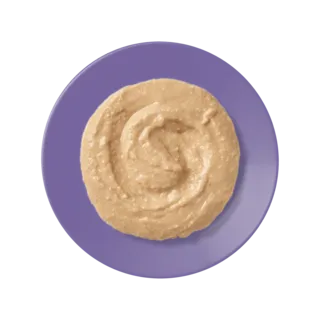
Variety Mousse Selection
High risk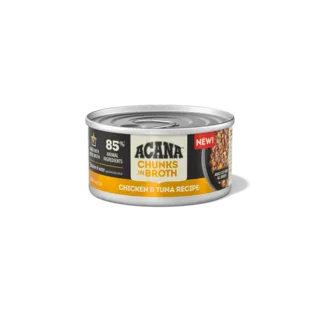
Chunks in Broth Chicken & Tuna Recipe Wet Cat Food
High risk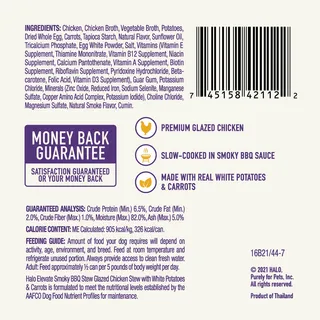
Elevate Smoky BBQ Grain Free Glazed Chicken Stew w/ White Potatoes & C
Medium riskCarnivore Cravings Savory Shreds Tuna & Pumpkin Recipe - Grain-Free Wet Cat Food Shreds in Pouches with Broth
Medium riskCarnivore Cravings Minced Morsels Chicken & Tuna Recipe - Grain-Free Canned Wet Cat Food Morsels in Gravy, Protein Rich & Low Carb
Medium riskReview Sources
Our aggregate score is calculated from reviews across multiple retailers
No ratings available