
Hi! I'm CodyBot. I can't answer your questions yet, but I can pass them on to my owner! 🐾
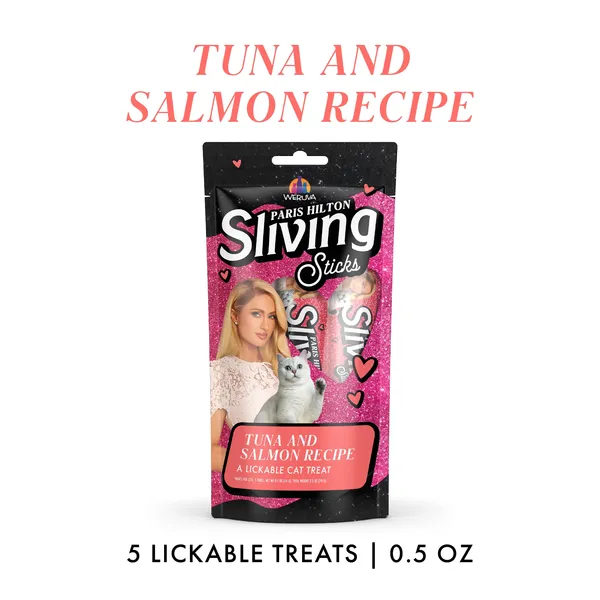
WeruvaParis Sliving Sticks Tuna & Salmon Lickable Cat Treats
Allergy Risk
This food contains possible allergens for sensitive pets.
Notable Benefits
Ingredients
Numbered in order of predominance by weight, heaviest first. Click any ingredient for details.
Paris Sliving Sticks Tuna & Salmon Lickable Cat Treats ingredients, explained
The recipe is built on salmon, listed third on the label. Common cat food allergens on the label: salmon.
What this food is made of
Fish with no species stated. The maker may use whatever is available, so the fish can change between batches. Nutritionally it is a fine protein and often a source of omega-3 fats. The gap is for pets with a known fish allergy, or whose owners are trying to track which protein causes a reaction, because an unnamed ingredient makes that very hard. Named fish such as salmon or whitefish give you that information.
A fish used mostly in cat foods, where its strong flavor is the point. Tuna is a good protein and a source of omega-3 fats. Two cautions apply to tuna fed often: it is higher in mercury than smaller fish, and cats can become fixated on it and refuse other foods. Both cautions apply to the cat eating tuna every day, and much less to tuna as one ingredient in a complete food fed in rotation.
A fatty fish used as a protein source and as a natural source of omega-3 fats. Fresh salmon is mostly water, so a salmon meal lower on the list may be contributing more protein. Salmon is a common alternative protein for pets that react to chicken or beef, though fish allergies exist too. Farmed and wild salmon differ in fat profile, and labels rarely say which.
Starch from the cassava root, used to bind kibble and as a carbohydrate source, especially in grain-free foods. It is nearly pure starch with little protein, fiber or micronutrients, and it is one of the least likely ingredients to trigger an allergy. A food that leans on tapioca for carbohydrate is getting easy digestibility and little else from it, which is fine as long as the rest of the recipe carries the nutrition.
The dried cells of yeast, often a by-product of brewing. It is rich in B vitamins, protein and minerals, improves flavor, and contains compounds that may support gut bacteria. Despite a persistent myth, there is no evidence it repels fleas. Yeast is an uncommon allergen in pets. Yeast culture is a slightly different product, a fermented feed that supplies similar nutrients.
A vegetable added in small amounts for fiber and a little flavor, and in fresh or raw recipes for its water content. It is safe for dogs and cats and appears well down the list, often alongside other vegetables in a blend. It brings almost no calories and only trace nutrients at these levels, so it changes nothing about the food either way.
Vitamins, minerals and additives (2)
The nutrient pack nearly every complete food carries. Expand to read what each one does.
A thickener from the guar bean, used to give wet food its texture and hold gravy together. It is a soluble fiber, and in large amounts it can soften stool. Not an allergen of note. Its presence tells you about texture, not nutrition.
A gelling agent from red seaweed, used to set wet foods into a loaf or jelly. It is a soluble fiber that passes through undigested and is used in tiny amounts. Agar is often chosen by makers who want to avoid carrageenan, which comes from the same kind of seaweed but has a more debated safety record. It has no nutritional role and no known concerns at food levels.
About this food
There is nothing quite like the pairing of tuna and salmon, especially when served in a smooth, lickable treat designed to hydrate and delight. A fresh and fabulous indulgence, it brings snack time into the world of sliving where every bite feels like luxury.
From the manufacturer. May contain marketing language.
Pricing & Formats
Available Sizes
Not specified
Where to buy
Reader-supported: we may earn a commission when you buy through these links. How we make money
Guaranteed Analysis
Each bar shows the typical range for cat foods in our database. The marker shows where this product falls.
*Not recognized as an essential nutrient by the AAFCO Dog Food Nutrient Profiles.
Similar foods you may like
Based on shared ingredients, features, and customer preferences

Puddy Pops Tuna & Salmon Lickable Cat Treats
Medium risk
Carnivore Cravings Savory Shreds Salmon, Tuna & Mackerel Recipe - Grain-Free Wet Cat Food Shreds in Pouches with Broth - ( )
Medium risk
Soulistic Moist & Tender Tuna & Salmon in Gravy Wet Cat Food Pouch
Medium risk
Carnivore Cravings Savory Shreds Tuna & Salmon Recipe - Grain-Free Canned Wet Cat Food Shreds in Broth
Medium risk
Cats in the Kitchen Pantry Pours Salmon Senior Bisque Cat Treat
Medium riskReview Sources
Our aggregate score is calculated from reviews across multiple retailers
No ratings available