
Hi! I'm CodyBot. I can't answer your questions yet, but I can pass them on to my owner! 🐾
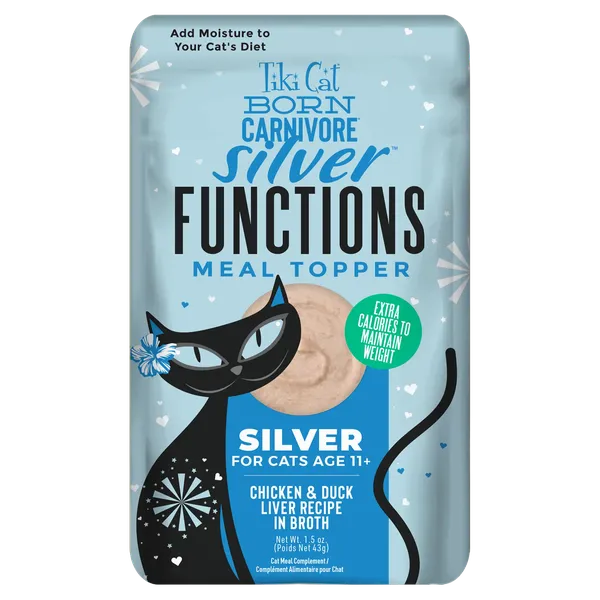
Tiki PetsTopper: Chicken & Duck Liver
Allergy Risk
This food contains possible allergens for sensitive pets.
Notable Benefits
Ingredients
Numbered in order of predominance by weight, heaviest first. Click any ingredient for details.
Topper: Chicken & Duck Liver ingredients, explained
The recipe is built on chicken: chicken broth, chicken and chicken natural flavor are three of the first eight ingredients. Common cat food allergens on the label: chicken, egg and tuna. Omega-3 comes from salmon oil, the form cats use directly.
What this food is made of
The most common protein in pet food, and for dogs one of the most common food allergens, with beef and dairy. If chicken is what your pet reacts to, it hides everywhere: chicken fat, chicken broth, chicken meal, natural flavor. On a label, chicken listed first is weighed with its water still in, so a food leading with fresh chicken often has less chicken protein than one leading with chicken meal. Neither is better; they are different measures.
Organ meat from the named animal, or unnamed when the label just says liver. Liver is one of the most nutrient-dense foods there is, rich in vitamin A, copper, iron and the B group, and most pets love the taste, which is why it is used both as an ingredient and as a flavor coating. For allergies, the species is what matters, and beef liver is beef. Unnamed liver can come from any species and may vary by batch.
A complete, highly digestible protein, which is why formulators like it. It is also a documented allergen in about 4% of dogs with food reactions. Egg allergy does not implicate chicken meat; the proteins are different. Dried egg product is the same thing with the water removed. A good ingredient for most pets and a fine-print one for the allergic few.
Oil pressed from salmon, added for the omega-3 fats EPA and DHA that support skin, coat and joints. It does the same job as generic fish oil but names its source, which helps if your pet reacts to other fish. Like all fish oils it spoils easily and needs a preservative, usually mixed tocopherols. The levels used in food are a modest supplement, well below a therapeutic dose.
A fish used mostly in cat foods, where its strong flavor is the point. Tuna is a good protein and a source of omega-3 fats. Two cautions apply to tuna fed often: it is higher in mercury than smaller fish, and cats can become fixated on it and refuse other foods. Both cautions apply to the cat eating tuna every day, and much less to tuna as one ingredient in a complete food fed in rotation.
A spice added for color and for its curcumin, a compound studied for anti-inflammatory effects. In people and lab animals curcumin is poorly absorbed unless paired with black pepper or fat, and the amounts in a pet food are far below those used in supplement studies. It is safe and gives kibble a warm color, which is most of what it is doing here; the joint and anti-inflammatory claims rest on doses far higher than a food provides.
An extract added in tiny amounts for its antioxidant compounds, and in some dental treats for breath. The caffeine content is the only real question, since caffeine is toxic to pets in quantity; the extract is usually decaffeinated or used in amounts too small to matter. There is no evidence the levels in a pet food produce any health effect. It is a marketing ingredient, safe at food levels.
Vitamins, minerals and additives (4)
The nutrient pack nearly every complete food carries. Expand to read what each one does.
A thickener made by fermenting sugar with a bacterium. It gives wet foods their gravy and keeps ingredients from separating in the can or pouch. It has no nutritional role, is not digested, and is used in very small amounts. Pets on a strict elimination diet may be asked to avoid gums, which is about keeping the diet simple. The gum itself is not a hazard.
Sodium and chloride, both essential, plus a palatability boost. Pets need less than people, and the minimum is set in the nutrient profiles the food is formulated to. Salt high on the list of a treat is a flavor choice; salt near the end of a complete food is nutrition. Ask your vet before choosing a low-sodium food for heart or kidney disease rather than reading labels alone.
A building block of cartilage, usually from shellfish shells, added to joint-support and senior foods. The evidence in dogs is mixed: some trials show modest improvement in arthritis signs, others none, and the dose in a food is typically well below the dose used in those trials. No safety issue at food doses. If joint support is the goal, the amount per cup, stated on the bag, is the number to compare; the ingredient's presence alone says little.
A cartilage component, usually from cattle or chicken cartilage, almost always paired with glucosamine in joint-support foods. The same caveats apply: the evidence in dogs is modest, the dose in a complete food is usually below that used in supplement trials, and the amount on the bag is what to compare. Because it usually comes from chicken or beef cartilage, strict allergy diets may need to check the source.
About this food
From the manufacturer. May contain marketing language.
Pricing & Formats
Available Sizes
Not specified
Where to buy
Reader-supported: we may earn a commission when you buy through these links. How we make money
Guaranteed Analysis
Each bar shows the typical range for cat foods in our database. The marker shows where this product falls.
*Not recognized as an essential nutrient by the AAFCO Dog Food Nutrient Profiles.
Similar foods you may like
Based on shared ingredients, features, and customer preferences
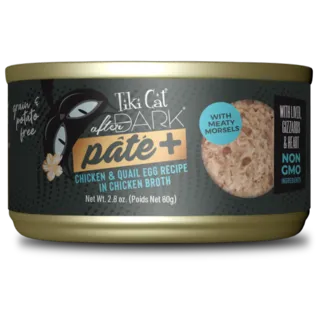
Tiki Cat™ After Dark™ Chicken & Quail Egg
Medium risk
Tiki Cat™ After Dark™ Chicken & Quail Egg
Medium risk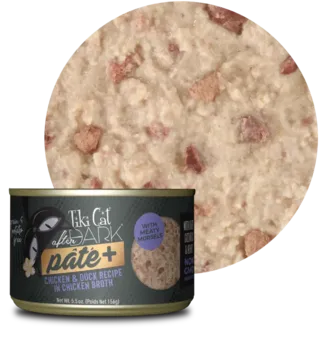
Tiki Cat™ After Dark™ Chicken & Duck
Medium risk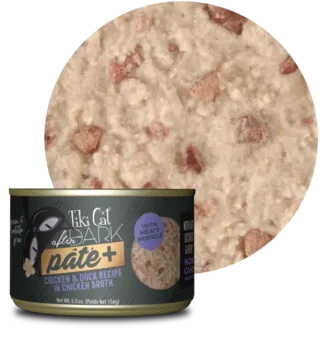
Tiki Cat™ After Dark™ Chicken & Duck
Medium risk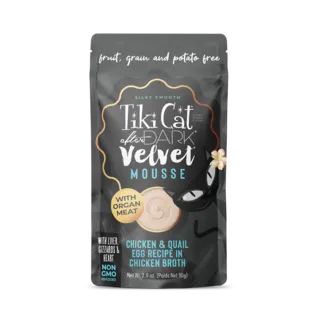
Tiki Cat™ After Dark™ Chicken & Quail Egg
Medium riskReview Sources
Our aggregate score is calculated from reviews across multiple retailers
No ratings available