 Made in USA

Hi! I'm CodyBot. I can't answer your questions yet, but I can pass them on to my owner! 🐾
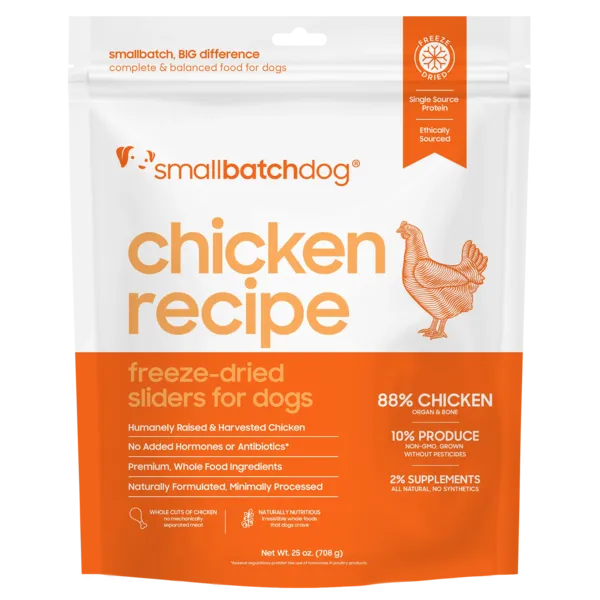
SmallBatchFreeze-Dried Chicken Sliders for Dogs
Allergy Risk
This food contains possible allergens for sensitive pets.
Notable Benefits
Ingredients
Numbered in order of predominance by weight, heaviest first. Click any ingredient for details.
Freeze-Dried Chicken Sliders for Dogs ingredients, explained
The recipe is built on chicken: chicken, chicken, chicken liver, chicken gizzard and chicken heart are five of the first six ingredients. Common dog food allergens on the label: chicken. Omega-3 comes from pollock oil, the form dogs use directly.
What this food is made of
The most common protein in pet food, and for dogs one of the most common food allergens, with beef and dairy. If chicken is what your pet reacts to, it hides everywhere: chicken fat, chicken broth, chicken meal, natural flavor. On a label, chicken listed first is weighed with its water still in, so a food leading with fresh chicken often has less chicken protein than one leading with chicken meal. Neither is better; they are different measures.
The liver of the chicken, used both as a nutrient-dense ingredient and as a flavor. It is rich in vitamin A, iron, copper and B vitamins and most pets find it very palatable, which is why it turns up in treats and as a coating on kibble. Because it is chicken, it counts as chicken for a pet with a chicken allergy, even when it appears far down the list.
A vegetable that contributes a little fiber and beta-carotene and a lot of label appeal. In dry food it is usually present in small amounts well down the list. It is not an allergen of concern and not a meaningful protein or calorie source. Fine to see; not a reason to choose one food over another.
Heart muscle from the chicken, a lean organ meat rich in taurine, iron and B vitamins. Raw and fresh-food makers use it as a natural source of the taurine cats require. It adds protein without much fat and appears mostly in fresh, frozen and freeze-dried foods. For an allergic pet it is still chicken.
A root vegetable used as a carbohydrate source, especially in grain-free foods. It supplies energy, fiber and beta carotene and is well digested by dogs. There is no good evidence it beats rice or oats nutritionally, though it is a reasonable choice for pets that do poorly on grains. Like any starch, a food that lists it high is a starch-heavy food.
Broccoli florets or stems, dried and added in small amounts for fiber, vitamins and antioxidants. It is safe for dogs and cats at food levels. Very large quantities contain compounds that can irritate the gut, which matters for a dog raiding the vegetable drawer. A fraction of a percent in kibble is nowhere near that, and it does not change the food's nutrition in any measurable way.
A dark leafy green, dried and added in small amounts, mostly for the vitamins and the look of the ingredient list. Kale is safe for dogs and cats at food levels. Like spinach it contains oxalate, and in quantity it is a consideration for pets prone to calcium oxalate stones, but the fraction of a percent in a complete food is not a factor. At these amounts it is there for the ingredient list and does not change the nutrition of the food.
A culinary herb added in tiny amounts, usually with a claim about fresh breath. Parsley does contain chlorophyll and some vitamins, but there is no evidence that the fraction of a percent in a pet food changes breath or anything else. It is safe at these levels. It appears on some toxic-plant lists because very large amounts can cause light sensitivity; the pinch in a pet food is nowhere near that.
A fruit added in small amounts for antioxidants and a bit of fiber. Blueberries are safe for dogs and cats, and the pigments that color them are the same ones linked to antioxidant activity in people. In a complete food they appear well down the list in small amounts, so they are a modest extra and should not decide which bag you buy.
Vitamins, minerals and additives (2)
The nutrient pack nearly every complete food carries. Expand to read what each one does.
A fat-soluble antioxidant that protects cells and the fats in the food itself. It is in nearly every complete food, both as a nutrient and, under the name mixed tocopherols, as the natural preservative that keeps fat from going rancid. Deficiency is rare in pets eating a complete diet. Nothing to worry about on a label, and a sign the maker is preserving with vitamin E rather than synthetic chemicals.
A dried seaweed added as a natural source of iodine and trace minerals. Iodine is needed for thyroid function, and kelp is one of the few whole-food sources of it. The iodine content of kelp varies a great deal between harvests, so it has to be tested and dosed carefully, and the label will not tell you whether it was. Pets with thyroid disease should get the vet's view on foods that use kelp as the main iodine source.
About this food
Complete freeze-dried raw, single-protein chicken dog food sliders with free-range chicken, organs, bone, and organic produce. Shelf-stable, convenient, and balanced.
From the manufacturer. May contain marketing language.
Pricing & Formats
Available Sizes
Not specified
Where to buy
Reader-supported: we may earn a commission when you buy through these links. How we make money
Guaranteed Analysis
Each bar shows the typical range for dog foods in our database. The marker shows where this product falls.
*Not recognized as an essential nutrient by the AAFCO Dog Food Nutrient Profiles.
Similar foods you may like
Based on shared ingredients, features, and customer preferences
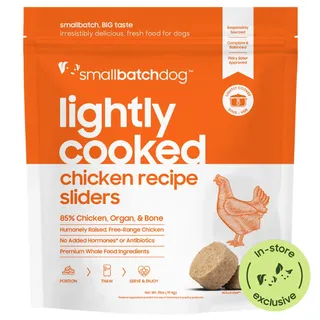
Lightly Cooked Chicken Dog Food
Medium risk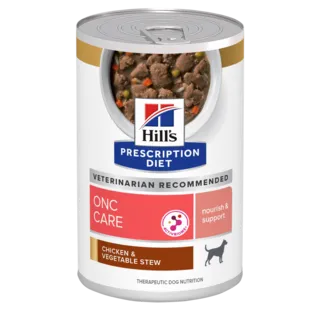
ONC Care Chicken & Vegetable Stew Dog Food
Medium risk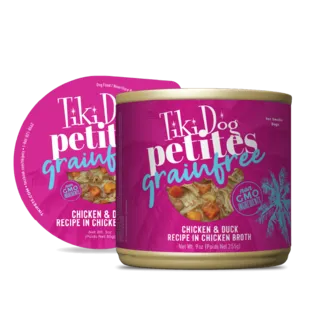
Tiki Dog™ Aloha Petites™ Chicken & Duck Maui
Medium risk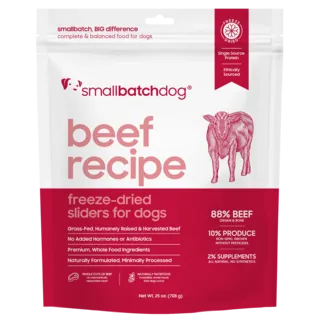
Freeze-Dried Beef Sliders for Dogs
Medium risk
Chicken & Brown Rice Dog Food
Medium riskReview Sources
Our aggregate score is calculated from reviews across multiple retailers
No ratings available