
Hi! I'm CodyBot. I can't answer your questions yet, but I can pass them on to my owner! 🐾
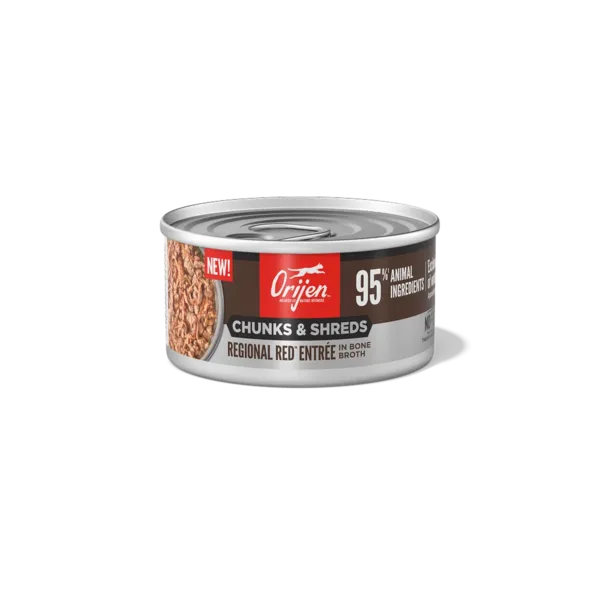
OrijenChunks & Shreds, Regional Red Entrée Dog & Cat Food
Allergy Risk
This food contains multiple possible allergens for sensitive pets.
Notable Benefits
Ingredients
Numbered in order of predominance by weight, heaviest first. Click any ingredient for details.
Chunks & Shreds, Regional Red Entrée Dog & Cat Food ingredients, explained
The recipe is built on lamb: lamb and lamb broth are two of the first three ingredients. Common cat food allergens on the label: lamb, tuna, beef and egg. Omega-3 comes from salmon oil, the form cats use directly.
What this food is made of
A red-meat protein, fattier than chicken and with a strong flavor many dogs prefer. Fresh lamb is weighed wet, so it sits higher on the list than the meal form would. Lamb was once the standard novel protein for allergy diets, and with wider use it now shows up as a reported allergen too, though still less often than beef or chicken.
A fish used mostly in cat foods, where its strong flavor is the point. Tuna is a good protein and a source of omega-3 fats. Two cautions apply to tuna fed often: it is higher in mercury than smaller fish, and cats can become fixated on it and refuse other foods. Both cautions apply to the cat eating tuna every day, and much less to tuna as one ingredient in a complete food fed in rotation.
Fish with no species stated. The maker may use whatever is available, so the fish can change between batches. Nutritionally it is a fine protein and often a source of omega-3 fats. The gap is for pets with a known fish allergy, or whose owners are trying to track which protein causes a reaction, because an unnamed ingredient makes that very hard. Named fish such as salmon or whitefish give you that information.
A red-meat protein, higher in fat and iron than poultry. Fresh or deboned beef is mostly water and ranks higher on the label than its dry contribution; beef meal is the concentrated form. Beef is among the most common food allergens reported in both dogs and cats, probably because it has been fed so widely for so long. Beef by-products such as liver and heart are listed separately.
A complete, highly digestible protein, which is why formulators like it. It is also a documented allergen in about 4% of dogs with food reactions. Egg allergy does not implicate chicken meat; the proteins are different. Dried egg product is the same thing with the water removed. A good ingredient for most pets and a fine-print one for the allergic few.
Oil pressed from salmon, added for the omega-3 fats EPA and DHA that support skin, coat and joints. It does the same job as generic fish oil but names its source, which helps if your pet reacts to other fish. Like all fish oils it spoils easily and needs a preservative, usually mixed tocopherols. The levels used in food are a modest supplement, well below a therapeutic dose.
A spice added for color and for its curcumin, a compound studied for anti-inflammatory effects. In people and lab animals curcumin is poorly absorbed unless paired with black pepper or fat, and the amounts in a pet food are far below those used in supplement studies. It is safe and gives kibble a warm color, which is most of what it is doing here; the joint and anti-inflammatory claims rest on doses far higher than a food provides.
Vitamins, minerals and additives (25)
The nutrient pack nearly every complete food carries. Expand to read what each one does.
An amino acid cats cannot make in sufficient quantity and must eat, or they develop heart disease and blindness. It is in every complete cat food by law of nutrition, not by choice. Dogs make their own, but it is added to many dog foods as a precaution after a federal investigation into diet-associated heart disease in dogs. Its presence on a dog food label is a good sign, not a warning.
A thickener from the guar bean, used to give wet food its texture and hold gravy together. It is a soluble fiber, and in large amounts it can soften stool. Not an allergen of note. Its presence tells you about texture, not nutrition.
A potassium source and an electrolyte. Potassium keeps muscles and nerves working, including the heart, and cats lose more of it than dogs do. It also stands in for part of the salt in foods that are formulated lower in sodium. A routine additive with no allergy or safety concern at food levels.
A B-vitamin relative added to nearly every complete food because animals need more than the base ingredients supply. It supports liver function and cell membranes. Seeing it on a label is normal and reassuring rather than a concern.
An essential mineral for muscle, nerve and bone function, added to guarantee the required level. The amount matters more than the form. In cats, higher magnesium combined with alkaline urine is linked to struvite crystals, which is why urinary foods keep it low; most foods list it far down because only small amounts are needed. Oxide and sulfate are the usual forms; proteinate is a chelated form marketed as better absorbed.
Sodium and chloride, both essential, plus a palatability boost. Pets need less than people, and the minimum is set in the nutrient profiles the food is formulated to. Salt high on the list of a treat is a flavor choice; salt near the end of a complete food is nutrition. Ask your vet before choosing a low-sodium food for heart or kidney disease rather than reading labels alone.
A calcium and phosphorus source that also keeps dry food from clumping. Both minerals are essential and their ratio matters for bone health. Routine and safe. For cats with kidney disease, phosphorus level is the number to watch, and the source is less important than the total.
A zinc source. Zinc is essential for skin, coat, immunity and wound healing, and deficiency shows up first as crusty skin. Some Arctic breeds absorb it poorly and need more. Sulfate and oxide are inorganic; proteinate or chelate is bound to protein, which brands present as better absorbed. Any of them is normal. Not an allergen.
Vitamin B1, essential for nerves and energy metabolism, and the vitamin most often behind cat food recalls. It is destroyed by heat and by some preservatives, so canned foods in particular must add it back. Cats are especially sensitive to running short. Its presence is expected; its absence from a cooked food would be a red flag.
A fat-soluble antioxidant that protects cells and the fats in the food itself. It is in nearly every complete food, both as a nutrient and, under the name mixed tocopherols, as the natural preservative that keeps fat from going rancid. Deficiency is rare in pets eating a complete diet. Nothing to worry about on a label, and a sign the maker is preserving with vitamin E rather than synthetic chemicals.
An iron source. Iron carries oxygen in the blood, and meat supplies much of it, with the mineral supplement making up the rest. Ferrous sulfate is the inorganic form; iron proteinate or chelate is the same mineral bound to a protein fragment, which brands describe as more absorbable. Either is normal. Not an allergen.
A synthetic form of vitamin K, which is needed for blood clotting. Dogs and cats normally make enough vitamin K with help from gut bacteria, so it is not required in most foods. AAFCO's cat food profiles require a source of vitamin K, such as menadione, in complete and balanced cat foods that are more than 25% fish on a dry matter basis, where it guards against a known deficiency. It is controversial online because high doses in lab animals caused harm; at the small amounts used in pet food, no harm has been shown.
Vitamin B3. Dogs can make some from the amino acid tryptophan; cats cannot make enough and must get it from food, which is one of many reasons cat food and dog food are not interchangeable. Water-soluble and safe at food levels. Expected on every complete food label.
A copper source. Copper is essential in small amounts for blood, connective tissue and coat color. Some veterinary nutritionists have questioned whether modern dog foods carry more copper than dogs need, and a few breeds (Bedlington Terriers, Labradors among them) are prone to storing it in the liver. For most pets it is a routine additive. If your dog has a diagnosed liver condition, copper level is worth a vet conversation.
A manganese source. Manganese is needed in tiny amounts for bone, cartilage and enzyme function. Sulfate is the inorganic form; proteinate is the mineral bound to protein. The choice between them is a marketing distinction more than a health one for a healthy pet. Expected, safe, not an allergen.
Essential for vision, skin and immune function. Cats cannot convert the plant form (beta-carotene) into vitamin A the way dogs can, so cat food must carry the preformed vitamin. It is fat-soluble and stored in the liver, so very high doses over time are harmful, which is why the amount is regulated. Normal on any complete food.
A root added for its inulin, a fiber that gut bacteria ferment. A prebiotic feeds the beneficial bacteria in the gut, and the pet gets the benefit second-hand. Studies in dogs show modest changes in gut bacteria and stool quality at the levels used in food. It is safe, and in large amounts can loosen stools, so it appears near the bottom of the list.
Vitamin B6 in its stable, added form. It is central to protein metabolism, and cats need proportionally more of it than dogs because their diet runs so high in protein. Water-soluble and safe at food levels. A normal line on any complete food.
Vitamin B5 in its stable added form (the d- prefix just names the active version). It is needed to turn fats and carbohydrates into energy. Widely available in meats and grains, topped up to guarantee the level. Safe, expected, and irrelevant to allergies.
Vitamin B2, used to turn food into energy. Present in meat and dairy but partly lost in cooking, so manufacturers top it up. Water-soluble and safe at the levels used in food. Its presence tells you the food was formulated to a complete nutrient profile, not that anything unusual is going on.
Vitamin B9, needed for cell division and healthy blood. Standard fortification in complete foods for dogs and cats. Water-soluble, no toxicity concern at food levels. Its main relevance to a shopper is none: it is there because the recipe was balanced properly.
An iodine source. Iodine runs the thyroid, and pets cannot get enough without it being added. Calcium iodate and potassium iodide are the common forms and do the same job. Whether dietary iodine plays a role in the overactive thyroid common in older cats has been studied without a clear answer. A normal line on any complete food.
A B vitamin tied to skin and coat quality and to fat and protein metabolism. Gut bacteria make some; food supplies the rest. Raw egg white contains a protein that binds biotin, which is the reason raw-egg diets can cause a deficiency. Safe, expected, and not an allergen.
Needed for nerve function and making red blood cells. It occurs naturally only in animal tissue, so it is added to almost every food to guarantee the level. Water-soluble, so excess passes out in urine. Cats and dogs with chronic gut disease can run low even on a good diet, which is a vet conversation rather than a food choice.
Dogs and cats cannot make useful amounts of vitamin D from sunlight, so it has to be in the food. It governs calcium and bone health. It is also one of the few vitamins where too much is dangerous: excess vitamin D has caused pet food recalls. The amount is regulated and the presence of D3 on a label is expected. What matters is that the maker gets the dose right, which is a quality-control question, not an ingredient question.
About this food
Nourish your cat with ORIJEN
From the manufacturer. May contain marketing language.
Pricing & Formats
Available Sizes
Price History (case of 24)
Where to buy (case of 24)
Reader-supported: we may earn a commission when you buy through these links. How we make money
Guaranteed Analysis
Each bar shows the typical range for cat foods in our database. The marker shows where this product falls.
*Not recognized as an essential nutrient by the AAFCO Dog Food Nutrient Profiles.
Similar foods you may like
Based on shared ingredients, features, and customer preferences
Chunks & Shreds, Beef & Tuna Entrée Dog & Cat Food
High risk
Chunks & Shreds, Salmon & Chicken Entrée Dog & Cat Food
High risk
Chunks & Shreds, Original Entrée Dog & Cat Food
High risk
Chunks & Shreds, Duck & Liver Entrée Dog & Cat Food
Medium risk
Chunks & Shreds, Chicken & Tuna Recipe for Kittens Dog & Cat Food
High riskReview Sources
Our aggregate score is calculated from reviews across multiple retailers