
 Made in USA

Hi! I'm CodyBot. I can't answer your questions yet, but I can pass them on to my owner! 🐾
Blue BuffaloBLUE Wilderness™ Wet Puppy Food - Turkey & Chicken Grill
Allergy Risk
This food contains possible allergens for sensitive pets.
Notable Benefits
Ingredients
Numbered in order of predominance by weight, heaviest first. Click any ingredient for details.
BLUE Wilderness™ Wet Puppy Food - Turkey & Chicken Grill ingredients, explained
The recipe is built on chicken: chicken broth, chicken and chicken liver are three of the first four ingredients. Common dog food allergens on the label: chicken. Omega-3 comes from fish oil as well as flaxseed; the fish sources are the form dogs use directly.
What this food is made of
A poultry protein, similar to chicken in nutrition and usually a little leaner. Fresh or deboned turkey is mostly water and ranks higher on the label than its dry contribution; turkey meal is the concentrated form. Turkey is often used as an alternative for pets that react to chicken, but the two are related birds and some pets react to both, so it is not a guaranteed swap.
The most common protein in pet food, and for dogs one of the most common food allergens, with beef and dairy. If chicken is what your pet reacts to, it hides everywhere: chicken fat, chicken broth, chicken meal, natural flavor. On a label, chicken listed first is weighed with its water still in, so a food leading with fresh chicken often has less chicken protein than one leading with chicken meal. Neither is better; they are different measures.
The liver of the chicken, used both as a nutrient-dense ingredient and as a flavor. It is rich in vitamin A, iron, copper and B vitamins and most pets find it very palatable, which is why it turns up in treats and as a coating on kibble. Because it is chicken, it counts as chicken for a pet with a chicken allergy, even when it appears far down the list.
The familiar white potato, used as a carbohydrate source in many grain-free foods. Potato starch binds kibble; potato protein is a concentrated plant protein that lifts the protein figure on the bag. Cooked potato is safe and well digested. Grain-free foods built on potatoes and legumes were part of the FDA's 2018 to 2022 look at diet-associated heart disease in dogs, which did not establish a cause; the agency has not asked for any to be withdrawn.
A staple of grain-free recipes, supplying starch, fiber and plant protein. Peas were common in the diets examined in a federal investigation into heart disease in dogs; the investigation did not establish a cause and no ingredient was banned. Pea protein high on a list can inflate the protein number with a plant source. Pea allergy is rare. Not a problem, but worth noticing when it appears in several forms in one recipe.
A plant source of omega-3 fat (alpha-linolenic acid) and fiber, used in about a third of dog foods for coat and stool quality. Dogs and cats convert plant omega-3 to the useful forms inefficiently, so fish oil does the job better. Flax is not a documented common allergen, though some pets tolerate it poorly, most often as loose stool. Fine in a food; not a reason to prefer it over one using fish oil.
Oil pressed from whole fish, usually menhaden, herring or sardine, added as the source of the omega-3 fats EPA and DHA. Those fats support skin, coat, joints and brain development, and a food that names fish oil is delivering them in the form pets use directly. It goes rancid quickly, so look for a preservative named alongside it, usually mixed tocopherols. The species is rarely stated, which matters only if your pet reacts to fish.
Vitamins, minerals and additives (23)
The nutrient pack nearly every complete food carries. Expand to read what each one does.
A calcium and phosphorus source that also keeps dry food from clumping. Both minerals are essential and their ratio matters for bone health. Routine and safe. For cats with kidney disease, phosphorus level is the number to watch, and the source is less important than the total.
A thickener extracted from red seaweed, used to give wet foods a firm loaf or smooth gravy. It is the most debated pet-food gum: some lab studies linked a degraded form to gut inflammation in rodents, and food-grade carrageenan is a different substance that has not shown the same effect, though the question stays open. Regulators in the US and EU allow it. A pet with chronic gut trouble is a reasonable case for trying a food without it.
A potassium source and an electrolyte. Potassium keeps muscles and nerves working, including the heart, and cats lose more of it than dogs do. It also stands in for part of the salt in foods that are formulated lower in sodium. A routine additive with no allergy or safety concern at food levels.
Sodium and chloride, both essential, plus a palatability boost. Pets need less than people, and the minimum is set in the nutrient profiles the food is formulated to. Salt high on the list of a treat is a flavor choice; salt near the end of a complete food is nutrition. Ask your vet before choosing a low-sodium food for heart or kidney disease rather than reading labels alone.
A thickener from the guar bean, used to give wet food its texture and hold gravy together. It is a soluble fiber, and in large amounts it can soften stool. Not an allergen of note. Its presence tells you about texture, not nutrition.
A B-vitamin relative added to nearly every complete food because animals need more than the base ingredients supply. It supports liver function and cell membranes. Seeing it on a label is normal and reassuring rather than a concern.
A zinc source. Zinc is essential for skin, coat, immunity and wound healing, and deficiency shows up first as crusty skin. Some Arctic breeds absorb it poorly and need more. Sulfate and oxide are inorganic; proteinate or chelate is bound to protein, which brands present as better absorbed. Any of them is normal. Not an allergen.
An iron source. Iron carries oxygen in the blood, and meat supplies much of it, with the mineral supplement making up the rest. Ferrous sulfate is the inorganic form; iron proteinate or chelate is the same mineral bound to a protein fragment, which brands describe as more absorbable. Either is normal. Not an allergen.
A fat-soluble antioxidant that protects cells and the fats in the food itself. It is in nearly every complete food, both as a nutrient and, under the name mixed tocopherols, as the natural preservative that keeps fat from going rancid. Deficiency is rare in pets eating a complete diet. Nothing to worry about on a label, and a sign the maker is preserving with vitamin E rather than synthetic chemicals.
A copper source. Copper is essential in small amounts for blood, connective tissue and coat color. Some veterinary nutritionists have questioned whether modern dog foods carry more copper than dogs need, and a few breeds (Bedlington Terriers, Labradors among them) are prone to storing it in the liver. For most pets it is a routine additive. If your dog has a diagnosed liver condition, copper level is worth a vet conversation.
A manganese source. Manganese is needed in tiny amounts for bone, cartilage and enzyme function. Sulfate is the inorganic form; proteinate is the mineral bound to protein. The choice between them is a marketing distinction more than a health one for a healthy pet. Expected, safe, not an allergen.
The usual source of selenium, a mineral that works alongside vitamin E as an antioxidant. Selenium has a narrow safe range, so the amount is regulated and small. Sodium selenite is the inorganic form; some brands use selenium yeast instead, which is absorbed differently, and market it as an upgrade. The evidence that it matters for a healthy pet is thin. Expected on a complete food.
Vitamin B1, essential for nerves and energy metabolism, and the vitamin most often behind cat food recalls. It is destroyed by heat and by some preservatives, so canned foods in particular must add it back. Cats are especially sensitive to running short. Its presence is expected; its absence from a cooked food would be a red flag.
Vitamin B3. Dogs can make some from the amino acid tryptophan; cats cannot make enough and must get it from food, which is one of many reasons cat food and dog food are not interchangeable. Water-soluble and safe at food levels. Expected on every complete food label.
Vitamin B5 in its stable added form (the d- prefix just names the active version). It is needed to turn fats and carbohydrates into energy. Widely available in meats and grains, topped up to guarantee the level. Safe, expected, and irrelevant to allergies.
Essential for vision, skin and immune function. Cats cannot convert the plant form (beta-carotene) into vitamin A the way dogs can, so cat food must carry the preformed vitamin. It is fat-soluble and stored in the liver, so very high doses over time are harmful, which is why the amount is regulated. Normal on any complete food.
Vitamin B2, used to turn food into energy. Present in meat and dairy but partly lost in cooking, so manufacturers top it up. Water-soluble and safe at the levels used in food. Its presence tells you the food was formulated to a complete nutrient profile, not that anything unusual is going on.
A B vitamin tied to skin and coat quality and to fat and protein metabolism. Gut bacteria make some; food supplies the rest. Raw egg white contains a protein that binds biotin, which is the reason raw-egg diets can cause a deficiency. Safe, expected, and not an allergen.
Needed for nerve function and making red blood cells. It occurs naturally only in animal tissue, so it is added to almost every food to guarantee the level. Water-soluble, so excess passes out in urine. Cats and dogs with chronic gut disease can run low even on a good diet, which is a vet conversation rather than a food choice.
An iodine source. Iodine runs the thyroid, and pets cannot get enough without it being added. Calcium iodate and potassium iodide are the common forms and do the same job. Whether dietary iodine plays a role in the overactive thyroid common in older cats has been studied without a clear answer. A normal line on any complete food.
Vitamin B6 in its stable, added form. It is central to protein metabolism, and cats need proportionally more of it than dogs because their diet runs so high in protein. Water-soluble and safe at food levels. A normal line on any complete food.
Dogs and cats cannot make useful amounts of vitamin D from sunlight, so it has to be in the food. It governs calcium and bone health. It is also one of the few vitamins where too much is dangerous: excess vitamin D has caused pet food recalls. The amount is regulated and the presence of D3 on a label is expected. What matters is that the maker gets the dose right, which is a quality-control question, not an ingredient question.
Vitamin B9, needed for cell division and healthy blood. Standard fortification in complete foods for dogs and cats. Water-soluble, no toxicity concern at food levels. Its main relevance to a shopper is none: it is there because the recipe was balanced properly.
About this food
Inspired by the diet of the wolf, grain-free BLUE Wilderness provides your dog with the optimal balance of protein, fats, and healthy complex carbohydrates. Compare your dog foods and see the Blue Buffalo difference.
From the manufacturer. May contain marketing language.
Pricing & Formats
Available Sizes
Price History (12.5 oz)
Where to buy (12.5 oz)
Reader-supported: we may earn a commission when you buy through these links. How we make money
Guaranteed Analysis
Each bar shows the typical range for dog foods in our database. The marker shows where this product falls.
*Not recognized as an essential nutrient by the AAFCO Dog Food Nutrient Profiles.
Similar foods you may like
Based on shared ingredients, features, and customer preferences
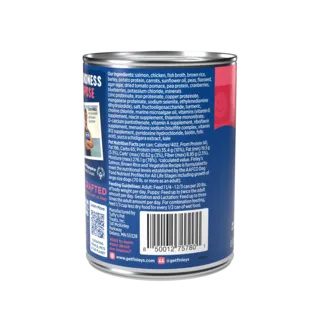
Salmon, Beef & Chicken, Brown Rice & Vegetable Wet Dog Food Variety Pa
Medium risk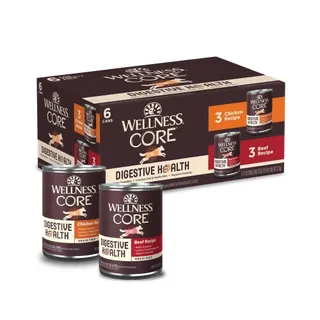
CORE Digestive Health Chicken & Beef
Medium risk
Baby BLUE™ Chicken Wet Puppy Food
Medium risk
Baby BLUE™ Turkey Wet Puppy Food
Medium risk
BLUE Homestyle Recipe Wet Puppy Food - Chicken & Garden Vegetables
Medium riskReview Sources
Our aggregate score is calculated from reviews across multiple retailers